Thursday, June 30, 2016

Day 129 - Papaya Level Four

Medellin

Having enjoyed the walking tour in Bogotá we signed up for the walking tour in Medellin, which we had heard good things about.

Our guide Juan gave us some good background on the city's violent drug related history as well as explaining the politics was involved, and also on the initiatives put in place to revive the city - things like the metro, libraries, and the use of art in previously "negative" spaces. It was very interesting but at times depressing, since the city is still struggling with the problems and the stigma that is attached. Two of Juan's uncles had been kidnapped back in the '80s, and the extended family almost lost everything they had to provide the ransom to obtain their release. Juan was also sent to the US when he was younger to escape the violence.


The peace treaty that was signed last week with the guerilla group FARC is not popular with everyone but there does seem to be a general consensus that the old way with the the army just killing and fighting the rebels has not been successful.  Something new has to be tried and they are using the strategy used in some of the African countries that have had similar issues.

The one on the left was damaged in a bomb blast
We were led through areas that Juan called "papaya level 4" - carry your pack on your front, don't show phones or money, be aware at all times. We never felt unsafe though, in fact people came up to the group at various points welcoming us to Colombia, there seems to be a feeling of gratefulness that tourists are overlooking the city's history and and coming to visit. Tourism has grown 260% since 2002 and Medellin has been voted the world's most innovative city because of it's ability to transform itself.


Wednesday, June 29, 2016

Day 128 - Dangerous?

Medellín

After a breakfast of coffee (M) and fresh strawberries (K), we ventured onto yet another teleferico. The cable car system is Medellín is part of the city's fantastic metro, which means on a single ticket you use the train and cable car to get to Santo Domingo, high above the city. This cable car is close to the best one we've been on, it's fast, steep. modern and travels a long way.

No, we didn't buy them all
After getting off at Santo Domingo, we changed to another cable car (which needed a new ticket), which took about 15 minutes to go all the way over the mountains to Park Arvi.

You get a nice view of the local soccer games from up here!

Lost in the jungle?
It was a lovely day to wander around the Park, we felt quite safe in Medellín, even though 20 years ago it was known as one of the most dangerous cities in the world.

Tuesday, June 28, 2016

Day 127 - Warming up

Salento to Medellín

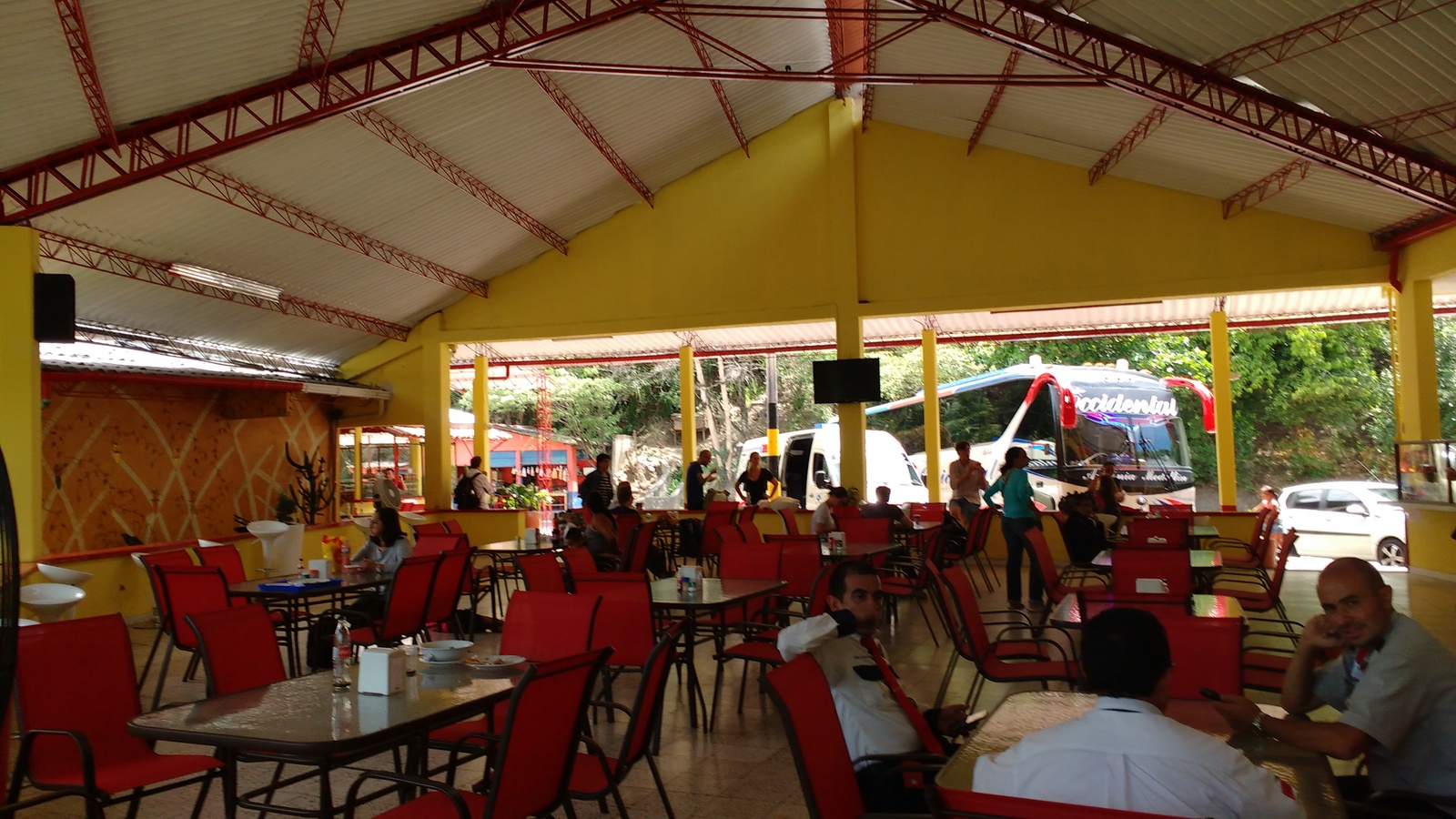
We caught a 10am bus from Salento to Medellín (along with 15 other gringos in our 17 seater bus). The road was windy and the scenery spectacular, including a nice stop for lunch in a spot where we could feel the tropical warmth and humidity we had been expecting.
They do good bus trip lunch breaks in Colombia
On arrival at the bus station in Medellín the taxi drivers wouldn't take us, which also happened to some of the others from our bus. Supposedly the drivers didn't know the address, but we believe it was actually because we weren't going far, so the fare wasn't enough. Luckily Uber drivers aren't as fussy, so within a few minutes we were on our way. Many of the taxis here have anti-Uber signs on their back windows, but they don't do themselves any favours if they can't be bothered with new arrivals at the bus station!

We finally made it to our aribnb apartment about 5pm, and later ate dinner on the balcony while we soaked up the warmth - thanks Medellín!

Monday, June 27, 2016

Day 126 - Caffeine fix

Salento

The main thing we wanted to do in Salento was to visit a coffee farm, so we caught a willy to the Ocaso coffee plantation. We were lucky enough that no other visitors were there, so we effectively had a private tour.

The tour was hands-on, really interesting and informative and our guide Camilla was particularly good. We learnt that there is a limited range of altitudes where coffee can grow, and of course Colombia has plenty of those areas. We followed the lifecycle of the coffee plant, where we were able to pick some beans, plant seeds, and then transplant seedlings, We then had a small bean picking competition (which K won), then learnt about processing, finishing up with roasting, grinding and of course drinking! We also learnt that it's difficult to get good coffee in Colombia, as the Colombians export the best beans and generally just the second class beans (bad shape, too small, discoloured) are used at home, so traditionally Colombians aren't into good coffee....as it's the expensive stuff for export!


That afternoon we caught a jeep to Salento's other major tourist attraction, the Cocora Valley, which has the last major population of wax palms, the tallest palms in the world. We had been told that this was the main reason people come to Salento, but we were a little surprised by this, maybe that's because coffee doesn't seem to be that interesting to Colombians!


It was Sunday, so when we arrived in the valley there were hundreds of tourists, nearly all Colombians. Many of the them were riding horses (with no helmets on and no control of the horses), at one point we were pushed aside from the path by horses who were focused on just getting to the end of the ride, nothing was going to stop them! We walked along the path for a while with palm trees standing tall amongst some quite beautiful scenery, before jumping into another willy back to town.

Sunday, June 26, 2016

Day 125 - Think of a time and double it

Bogota to Salento

We were catching a bus to Colombia's coffee growing area, known as El Eje Cafeterio,  We had two options for an early start, 6.30am or 8.30am. We decided on the early one, since the trip is always longer than the quoted time and we don't like arriving in new places in the dark. The bus left about 15 minutes late, a little unusual, we then drive through the Bogota traffic and after an hour we were still in Bogota. We stopped at another bus station where the police checked our passports, and about 20 minutes after that we were finally on our way again.
Lunch stop
There were further delays as we went, the road was very windy and climbed steadily for a very long way, so the bus was stuck behind slower trucks, There was also a massive traffic jam, caused by a truck that had jack knifed on one of the corners.

We finally arrived at the bus station in Armenia and swapped to a mini van to take us to Solento. We were dropped off nowhere near the bus terminal or where we were staying (this seems to be a common theme) so dragged our luggage to our hostel, which was on the outskirts of town with not a a taxi in sight. All in all the trip that we were told would take 6 to 7 hours took about 12 overall, we've given up ever believing that we would ever arrive anywhere on time. We later found out that the town has no taxis, only things called "Willys", jeeps by the plaza that act as the only transport around town. 

The place we were staying at was run by a Colombian/American who had spent some time in Melbourne. The room was basic but had a nice view over the nearby valley, and being on the edge of town also meant it was nice and quiet. Later we ate at an Indian restaurant, which was run by a guy from Madrid who had lived in Melbourne as a child. Amazing that the two locals we'd spoken with at length had both lived in Melbourrne!

Saturday, June 25, 2016

Day 124 - Stop the bus!

Bogota

M had spent ages the night before trying unsuccessfully to buy bus tickets for Pereira over the internet, so this morning we walked through the streets of Bogota (not a gringo in sight anywhere!) to the bus company office to buy them in person.

We then headed by bus to the town of Zipaquirá just north of Bogota to visit the Salt Cathedral. The place seemed quiet when we arrived until we started walking to the entrance where there were heaps of people lined up to enter, many of them dressed up in their "Sunday best".

It isn't officially a cathedral (there is no bishop), but is a very large salt mine that has been turned into a tourist attraction with chapels, reception areas (all the dressed up people were there for a university graduation), a cinema, popcorn stalls, museums, multiple shops, restaurants and more. We thought the entry fee was quite expensive (for South America) at $20, to get into what was a combination of church and glorified amusement park. They have made clever use of the old part of the mine but there wan't much salt to see as it had been extracted already. The salt mining is still happening nearby, but using modern extraction techniques involving high pressure water.

After that we walked back to the main road in to get a bus back to the Trans-Millenia (Bogotá's bus transport that has its own lane so moves at a good speed) terminal. We were told the bus was going to Portal Norte, but it actually just stopped briefly across the road before heading off in a different direction to where we wanted to go. We ended up getting stuck in some pretty bad traffic (caused by a couple of breakdowns) before finding ourselves at a bus terminal about half an hour away from where we were staying. Taxis are cheap and plentiful though so we just caught one back from there, and at least we got to see a different part of Bogota!

We liked Bogotá and could have stayed longer but the apartment was booked to someone else the next day so it was time to move on. Plus we are still chasing warmth, here we are so close to the equator but it's still a bit cool and rainy.

Thursday, June 23, 2016

Day 123 - Yet another teleferico

Bogota

The last couple of free walking tours we've tried in South America have lacked some of the interest and polish of those we've done elsewhere, but the one in Bogotá had quite good reviews so we decided to give it a try.

We joined the small group in front of the Gold Museum, and enjoyed a very interesting tour. The guides had great English, and gave us a good mix of history, art and sociology (plus we got to try chicha, which is a corn based alcoholic beverage). Also interesting about today's tour was that this is the day the government and  the main guerrilla organisation FARC were signing a peace treaty, so seeing the preparations being made for live broadcasts gave us a sense of how important this was, and having the guides gave us a better understanding of what was going on.

One of the squares we visited was the centre of the emerald trade, there were men milling around with emeralds in their hands wrapped in white paper, ready to show anyone who is interested.  The building behind them was the Emerald Trade Centre and you could see the men in the windows using the light to check the quality of the stones. We had been to this square the day before and hadn't noticed it, prrof that sometimes you need locals to show you what is going on right under your nose!
After the tour finished we walked to the telefericó to head up to Monserrate. This was a bit different to the other telefericos we'd been in, this had a large carriage which could fit up to 40 people. It moves up quite fast over a forest of eucalyptus, all over South America we have felt at home with gum trees everywhere. As expected the view from the top at Monserrate overlooking Bogotá was wonderful and really gave us an idea of the size and spread of the city.

The walking tour had taken us briefly through the Botero Museum so we went back there to finish having a look at Botero's paintings, his most famous being his portrayal of the Mona Lisa. After that a quick visit to a couple of other nearby museums (all free) finished up our cultural activities for the day.

The more we walk the streets of Bogotá the more comfortable we feel. There are no go areas which we have been avoiding, and in general the advice is not to walk around after dark. The issue is not just Bogota's reputation but also how gringos can be perceived as an easy money target, so we've been playing it safe and making sure we're home before dark.

Day 122 - Doing our duty!

Bogota

Another nice modern airbnb apartment to stay in, in what was once known as one of the most dangerous cities in the world, Bogotá. K's friend from Bogotá, (that's you Camillo!) told us not to visit his home city, and some of the stories we've heard about the city are pretty scary so we set out for the day with our wits about us.

Our first stop was the Australian Consulate to lodge our vote and we decided to catch Uber as the taxis have a reputation, and we'd met someone in Quito who had recommended it. The consulate was about half an hour away from the city and we arrived at a new and very modern building with state of the art security. We were shown into two rooms with the flag and pictures of Malcolm Turnbull and Julie Bishop on the wall, and pretty much voted just like we would at home - difference being that it did take some time to get there and back, and there was a bit more security than voting at the local primary school!

Back in the city we headed to the Gold Museum (kind of ironic as K had removed every piece of jewellery she had before stepping onto the streets of Bogotá). There was certainly plenty of gold on display, but most of it was either very thin or small. K was itching to get to see what was in the gift shop but unfortunately didn't see anything that took her fancy.

We then headed for afternoon tea at a coffee shop with good reviews that was apparently owned by some Aussies. The reviews had mentioned flat whites and caramel slice, but we ended up a little disappointed - the coffee cups were tiny, the coffee lukewarm and they didn't have any caramel slice!

On the plus side we had found a supermarket near the Australian Consulate that sold Tikka Masala curry paste so we had yummy chicken tikka masala for dinner - good to be able to cook something with plenty of flavour for a change!


Wednesday, June 22, 2016

Day 121 - Back in the air

Pasto to Bogotá

We had decided to treat ourselves and fly to Bogotá as it is a very long bus trip, and has also been known as a dangerous stretch of road with many bus robberies etc. We had a bit time to fill in until the flight so we spent the morning wandering around the city of Pasto which isn't really much of a tourist town, but we did manage to use our time productively getting a data sim card sorted, which ended up taking quite a while.
The shoe shiners in Pasto are sponsored?
Our homestay accommodation had booked us a taxi to take us to the airport. We knew it was about 45 minutes to an hour from the city but what we hadn't expected was that it was way out in the countryside. We very quickly left the city and we were once again driving through rolling green hills and farmland, could this really be the way to the airport? We saw lots more police checks of vehicles heading south (searching for cocaine smugglers) including one busy area where there were lots of food stalls set up, so drivers can get something to eat while the police are searching.

At the airport we endured the slow antiquated check in to get our boarding pass, and were then told we had to go to the police counter. There all our passport details were handwritten into a log book (containing foreigners' names only) and our boarding passes were stamped with a police stamp.

Walking across the tarmac felt quite strange after so many bus trips, it felt like we had gone up in the world to be getting on a plane. The flight was uneventful (though the nun seated next to K crossing herself as we took off was a little worrying), and the taxi ride to our nice airbnb apartment in downtown Bogota was a breeze.


Monday, June 20, 2016

Day 120 - How not to see Las Lajas Sanctuary

Quito (Ecuador) to Pasto (Colombia)

We reluctantly checked out of our gorgeous airbnb and said goodbye to the wonderful views of Quito to tackle another day of travelling. Another day bus journey, this time with a few different sections, including the border crossing into Colombia.

We left at 7am and caught the taxi to the bus station - so far so good. When we bought the tickets we were told that the bus to Tulcan on the Ecuadorian side of the border was leaving immediately. We rushed through to the bus to find that it didn't leave until 8am. Lesson - when the person selling you the ticket says the bus is leaving now .... it probably isn't (but it also could be ... so don't completely ignore them either)!

The bus ride itself was fine. Once again we were subjected to a snake oil seller, this time something with ginseng in it, and she took great pains to explain that the product wasn't made in China! It was very common on this trip for food vendors to hop on the bus. One stop was hilarious, the bus was virtually turned into a market, there were so many of them that the aisle was full as they all shouted over each other trying to sell their wares and get past each other.

We arrived at Tulcan a little after 1pm and we jumped in a taxi to "La Frontera", the border crossing.
The formalities on the Ecuadorian side were quick and painless, we then walked across the bridge to the Colombian side, where immigration there was also easy. We changed some money (no ATM on the Colombian side, though there was one on the Ecuadorian side) and hopped into taxi number three to get us to the bus station in Ipiales. On the way there were many police stopping cars, trucks and bikes and going through them, we realised that as we were close to the border the police must be looking for cocaine smugglers.

The plan in Ipiales was to leave our luggage while we went and visited Las Lajas Sanctuary. We had read there was official luggage storage, and we saw a sign referencing it, the problem though was that we couldn't find it. K asked a few different people who sent us from one side of the terminal to the other, before we were worked out that we could leave it one of the shops (2000 pesos per bag). They probably make more out of that than selling their biscuits and drink.


We then caught taxi number four to visit the beautiful Las Lajas, an exquisite grey and white church built across a canyon with a waterfall nearby. The taxi driver was very chatty and wanted to know a bit about Australia (it seems all anyone knows about Australia is kangaroos). He asked if we were near Germany, or England, we tried to explain where we were and that we were an island, but we couldn't quite get him to understand how big Australia was, especially when we told him it had half the population of Colombia.

Las Lajas itself and its surroundings are postcard perfect, unfortunately it started to rain but it was still beautiful. We had walked down from where the taxi had dropped us off to see the church, but as there was a teleferico we decided to take it back up. After a very slow trip up, we found that there were no taxis there to take us back to town. We walked down to the road to hail a taxi, but everyone that came past had people in it. Eventually a local bus came past and we hopped on. The driver seemed to find it quite amusing that he'd picked up two stranded gringos, when we asked if it went past or near the bus station he just kept grinning. He was obviously useless, so using Google Maps we jumped off when we thought we were close and followed Google's directions to what ended up being the local livestock and wholesale farmers market part of town - not a bus station in sight.


Some locals pointed us in the right direction., and after a 10 minute walk we finally found the station, collected our bags, and got on a bus to Pasto. We were told this one was leaving "now" - and this time it actually was, it started moving while we were finding our seats. The trip went through beautiful scenery of lovely green rolling hills and we finally arrived into Pasto at around 6:30pm.

We picked up taxi number five for the day and gave him the address of where we were staying in Pasto. The driver was either very dumb or decided he couldn't be bothered with gringos, he pretended he didn't know where to go, we ended up stopping him and hopping out when he started driving away from the place we had to direct him to using Google Maps, but we couldn't see anything like a hostel or house. It was now quite dark, we had only been in Colombia a few hours and it was the second time we were stuck on the side of the road! We were fairly sure we were in the right area though, and after a bit of searching the area we managed to find our accommodation.

In summary, after 12 hours of travelling, 3 buses, 5 taxis and 1 teleferico we reached our destination, a little tired and hungry but also pleased that we hadn't decided to push on any further that day!